
2nd Lieutenant. 2nd Battalion, Lincolnshire Regiment.
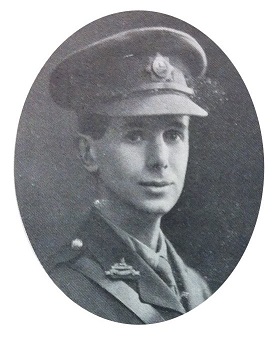
Early life:
Clifford was born in Bradford, his parents were Benjamin Abbott and Harriet Abbott née Hammond, who were married on the 28th of December at St. Peter’s Church, Wisbech in Cambridgeshire. When they married, Benjamin was aged 23 and Harriett was 22.
Clifford’s birth was registered at Bradford in the first quarter of 1882. His father Benjamin was a draper and they were living at 183, Lumb Lane in Bradford.
In the 1891 census Clifford was aged nine and was still living at 183 Lumb Lane with his father Benjamin aged 45 and still a draper, mother Harriet aged 41 and looking after the family home. Clifford’s siblings were Alfred aged 16 (not working) and Benjamin junior aged 15 who was a draper’s errand boy, probably for his father. Clifford and his five year old sister Elsie Mary were at school and Bernard was aged just eleven months. They were sufficiently well-off and could afford one domestic servant, 16 year old Mary Ann Swift.
Clifford attended Bradford’s Belle Vue Boys Grammar School and later attended the University of London and then Cambridge University as a post graduate.
In 1901 Clifford was aged 19 and lodging at 5, Edina Place in Edinburgh and was a student at Moray House, Edinburgh College.
By 1911 Clifford was aged 29 living as a ‘separate occupier’ at 10, Highfield Lane in Keighley. He was employed as an assistant secondary schoolmaster for the Borough Council at Keighley Boy’s Grammar School.
He was lodging in a separate part of the house from the owner Sarah Dixon, who was aged 89 and a widow living with her two daughters Martha Ann aged 61 and Emma Julia aged 51. They were all living on private means with ‘no occupation’ stated in the census for the daughters.
According to the electoral roll for that year, Clifford was occupying a furnished bedroom and sitting room on the first and ground floors.
Later that year on the 29th of December 1911, Clifford was aged 29 when he married 28 year old Elsie Annie Foulds at Salem Chapel, Burley-in-Wharfedale. Elsie was an assistant Secondary Schoolmistress employed by Bradford Education Committee.
War service:
In 1915 he left Keighley Trade and Grammar School and attended Christ’s College, Cambridge where he joined the Officer Training Corps. On the 21st of November 1916 he obtained a commission in the Lincolnshire Regiment and was stationed at Grimsby.
On the 17th of January 1917, He reported at Victoria Station for service in France.
ON the 7th of May Clifford was wounded by a shell splinter which paralysed his legs. He passed into unconsciousness and died of his wounds that day.
He is buried in La Chapelette British and Indian Cemetery, Peronne, France. Plot I., Row B., Grave 2.
Keighley News report 12th May 1917:
WEEKS WAR CASUALTIES. HEAVY LOCAL LISTS. FORMER TRADE SCHOOL MASTER KILLED.
LIEUTENANT C. H. ABBOTT
Second Lieutenant Clifford Hewson Abbott, Lincolnshire Regiment, son of Mr and Mrs Benjamin Abbott of Manningham, Bradford, has died of wounds received in action. Lieutenant Abbott was an “old boy” of Belle Vue School, Bradford. He won a scholarship which took him to the Technical College, and entering the teaching profession, was for eight or nine years an assistant master at Keighley Trade and Grammar School. As a master he was greatly esteemed, and exercised a fine influence on the boys under his control. He resigned his post at the Keighley Trade and Grammar School to go to Christ’s College, Cambridge. He was a B. A. of London University, and was 35 years of age. He married the eldest daughter of Mr and Mrs Foulds, of Burley in Wharfedale.
Keighlian magazine letter (published July 1917 )which Clifford wrote from the front:
France. 6th March 1917. TO THE EDITOR OF “THE KEIGHLIAN.”
Dear Sir,
It may interest your readers to hear the doings of a former master, and as I happen to have some time on my hands, here goes.
After leaving No. 2 Officer Cadet Battalion I spent some time in Grimsby attached to the 3rd Lincolnshire Regiment. Here I was in partial charge of a melancholy band of conscripts billeted, of all places, in the Gaiety Theatre! Surely a “lucus a non lucendo.” In this gloomy and draughty place they ate, slept, cleaned their equipment, and, on wet days, drilled, being torn between the two dreadful alternatives of getting themselves efficient for service in the field or of getting the rough side of the tongue of a peculiarly eloquent and vitriolic sergeant-major with an eagle’s eye for a defaulter and the scent of a stag for a shirker. As you will guess it was a recruit company and I really found the work very interesting. It was delightful to watch the emaciated getting fatter, the corpulent thinner and all of them fitter in every way under army training and army food.
I had a week’s shooting at Strensall near York and then came across. I lunched economically of the chops of the channel and then came under absolutely abominable conditions of weather and food to the Base Camp. It is also called a Rest Camp, but on mature consideration “base is a more fitting epithet. Well, sir, the conditions were such that your correspondent, ordinarily a man of temperate habits and good health, fell ill and was immediately sent into hospital. All my life I have had a horror of public hospitals but I own myself a grateful convert. True, the hospital was only a marquee, but to one suddenly transported from sleeping (or trying to) on the floor of a tent which was surrounded by a gutter of water and a sea of knee-deep mud, it seemed the very gate of heaven, and the ever adorable Sisters the ministering angels thereof.
A few days later sufficed to put me well again, and after a little longer at the base, I came out to join the battalion to which I was proud to be posted. Part of the battalion went straight into action on the following day, with what success, the newspapers have said. I, as a novice, was left with the Support Trenches and had the thrilling, necessary, but inglorious task of conducting nightly carrying parties to the Front Trench under shell fire.
Alas! Less than a fortnight was too much for me, and here I am in hospital once more. No one who has been through it can conceive of the strain of walking along miles of communication trench with mud everywhere up to the knees and in places up to the hips.
Well, sir, your Magazine profits from my enforced lack of occupation. Good luck to the Magazine and to the Old School!
Yours sincerely,
C. H. Abbott, 2nd Lieutenant., 2nd Lincs Regt.
Letter from Mrs Abbott to ‘The Keighlian’ magazine and printed in July 1917:
In Memoriam
The following letter has been received from Mrs Abbott, relating to the career of the late Second Lieutenant C. H. Abbott, since he left this School, less than two years ago, and of his subsequent death in France. Less than two years ago my husband, Mr Abbott, was your Barrett House master, today, I have just read his name on the Roll of Honour of the Cambridge University.
I feel sure that all of you who knew him as a master would like to hear some further particulars of his career since leaving you in October, 1915. As soon as he had joined Christ’s College he became a member of the O.T.C. and from three days a week training he passed to full time service in the course of that year. Still he “kept term” and by studying in the evenings managed to take his “Mays” when he passed in first year English and 2nd year French (Honours course) 2nd Class. I can’t tell you what a delight the university life was to both of us – of the distinguished and charming people we met – of the interesting lectures and of the College and O.T.C. chums whom my husband and I entertained at Newham.
The town itself teems with interest and the Colleges are full of delightful associations and about in old world history.
From the O.T.C. my husband passed as a cadet to Queen’s College and from that unit in November last he obtained his commission in the Lincolnshire regiment. At first he was stationed at Grimsby – then came the notice to report at Victoria Station for France on January 17th, 1917. Since then his course is marked only by letters – full of the jolly comradeship of men at the front – they laughed at hardships – scoffed at danger – running on the top of the trenches “without getting the wind up.” His letters – even to his last – written lying on his face in dreadful suffering – reveal nothing but the cheeriest optimism. His fellow-officers called him “the happy sandboy” because of his habit of wearing his sleeping-cap with the tassel hanging down on one side, whilst in the trenches. He really entered fully into the sport of annoying “Fritz” and “would not have missed the adventure for worlds.”
“We were just going to have dinner by the roadside – preparatory to starting on our nightly ‘biff’ when Fritz sent two shells rather unpleasantly near. We carried on, however, until one fell quite close – then we thought it time to move on. Just as we were moving off another came and a piece of shell struck your husband. He was jolly good about it too – laughing and joking with us and telling us in good military language what he thought about us all – as he was carried off.” This is an extract from a fellow-lieutenant’s letter. After that came letters from the Casualty Clearing Station – at first hopeful – then the War Office telegram announcing his death. The splinter of shell paralysed his legs and he gradually from great suffering – patiently borne – passed into unconsciousness and died. On a map of Haigh’s advance is the little town of Peronne about five miles behind the present lines and that is where his body lies in the English Cemetery of La Chapelette.
Keighlian Magazine obituary, July 1917:
Mr Clifford Hewson Abbott, B.A.
2nd Lieutenant. Lincolnshire Regiment.
Mr Abbott was a Form Master in the School from October, 1905, to October, 1915. He left the School at that time to enter Christ’s College, Cambridge. Particulars of his career at Cambridge and in the Army will be found on another page in this Magazine and will be read with sorrow and interest by all present and former pupils.
Mr Abbott was greatly respected and liked by all his pupils, and not only in the classroom, but in his position as House Master of the Barrett House, he exercised a powerful influence for good upon his scholars.
Both boys and Masters unite in expressing their deep sympathy with Mrs. Abbott in the great loss which she has sustained.
Remembrance:
He is of course remembered on his Commonwealth War Graves Commission headstone at La Chapelette British and Indian Cemetery, Peronne.
Clifford is remembered on the Roll of Honour for Cambridge University and in the Roll of Honour for Keighley Trade and Grammar School (published in the Keighlian Magazine.) He is also named on the Belle Vue Boys School roll of honour boards which are at Beckfoot Upper School, Thorn Lane, Heaton in Bradford.

His name is also included in the Borough of Keighley’s Great War Roll of Honour book which is on permanent display at Keighley Library.
The ‘Incorporated Association of Assistant Masters’ also published a roll of honour, which bears his name and that he was employed at the Grammar School, Keighley.
Post war:
He was posthumously awarded the British War Medal and Victory Medal for his war service. On the 25th February 1922 these medals were sent to his widow Elsie at Uffculme Open Air School near Cropwood, Blackwell, Near Bromsgrove, Worcester, where she was working as a teacher). She would also have received his personal effects plus a bronze war memorial plaque and scroll inscribed with his name.
Clifford had made a will and left the sum of £261 8s 10d to Elsie.
She received his outstanding Army pay which amounted to £34 10s 0d, on the 13th of June 1917, having already received a payment of 4s 2d and £11 5s 8d in May 1917. She later received £43 9s 10d on 7th September 1917.
She also received a £5 War Gratuity on 30th of December 1919.
Elsie applied for a Dependant’s Pension but there is no evidence to suggest she received anything, particularly as the card states she had remarried and was now Elsie Annie Upton, having married Albert Donald Upton on the 4th of February 1925.
They emigrated to the United States of America. In 1977 Elsie died at the age of 93 at Arlington in Virginia.
Information sources:
England & Wales, Civil Registration Marriage Index, 1837-1915.
England, Select Marriages, 1538-1973.
England & Wales, Free BMD Birth Index, 1837-1915.
1891 England Census.
1901 Scotland Census.
1911 England Census.
West Yorkshire, Non-Conformist Records, 1646-1985.
England & Wales, Free BMD Marriage Index, 1837-1915.
West Yorkshire, England, Electoral Registers, 1840-1962.
Keighley News archives at Keighley Library.
The Keighlian Magazine, Andy Wade Collection.
Army Registers of Soldiers’ Effects, 1901-1929.
British Army WWI Medal Rolls Index Cards, 1914-1920.
WWI Service Medal and Award Rolls, 1914-1920.
Soldiers Died in the Great War, 1914-1919.
Commonwealth War Graves Commission.
England & Wales, National Probate Calendar (Index of Wills and Administrations), 1858-1966
World War I Pension Ledgers and Index Cards, 1914-1923.
Britain, Trade Union Members, Service & Casualties 1914-1918, Incorporated Association Of Assistant Masters In Secondary School.
Borough of Keighley Roll of Honour at Keighley Library.
