
Second Lieutenant. 5th Battalion, Duke of Wellington’s West Riding Regiment.
Formerly Private Moore. 1/6th Battalion. Duke of Wellington’s West Riding Regiment. No. 2579 and later 265628.
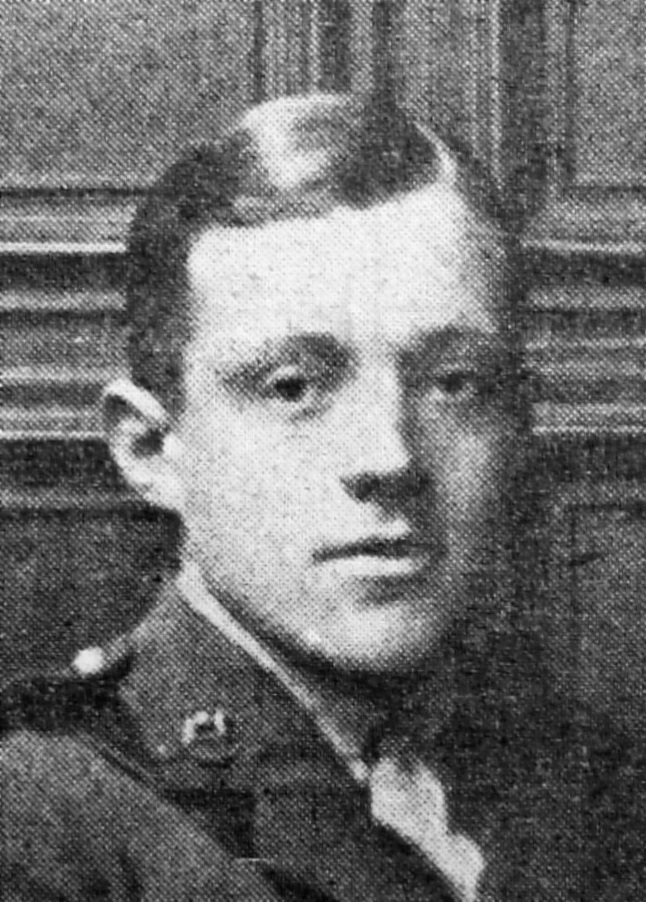
Early life
John was born in Oakworth on the 8th of May 1896 and his birth was registered in Keighley in the second quarter of that year. His parents were Emmanuel Moore and Emma Elizabeth Moore née Dawson. His father was a shoemaker.
John was baptised on the 7th of June at Keighley (Lund Park) Wesleyan Chapel and at the time they were living at Compton Terrace, Keighley.
In the 1901 census John was aged four and living at 16, Unity Street, Keighley with his parents, sister Elsie aged 13 and his brother Cecil aged two. His father was still a boot and shoemaker (Employer.) His sister Elsie was a cigar maker.
By the time of the 1911 census he was aged 14 and living at 2, Fell Lane, Keighley, with parents, sister, brother, Aunt, and three boarders. Father’s occupation: Boot maker (own account). Mother’s occupation: Confectionery retailer: Own account. Sister Elsie’s occupation: Confectionery retailer (own account) Aunt working as a confectionery assistant. Number 2, Fell Lane is currently a retail property (launderette) and may have been where John’s mother ran her business from and the three boarders were all bakers.
War service
John enlisted in September 1914 with the 6th Battalion, West Riding Regiment (Territorials) at Keighley, along with many friends from Temple Street Wesleyan Chapel. His name appears in ‘Keighley’s Gallant Sons’ as an early volunteer. His regimental number was 2579 when he went out and this was later changed to 265628 when the numbering was reorganised in 1917. He was also mentioned in the October 1914 issue of the Keighley Wesleyan Circuit magazine, as having recently enlisted.
As ‘Private J.C.D. Moore,’ John is named on the nominal roll of the 1/6th Battalion West Riding Regiment which sailed on 14th April 1915 from Folkestone on SS Onward, arriving early the next morning in Boulogne, France. He served with the battalion for two years, gaining the rank of Lance-Corporal and eventually being recommended for a commission.
John was sent for Officer training and became a Second Lieutenant in August 1917. He returned to the front lines as an officer with the 1/5th Battalion West Riding Regiment.
He was wounded on the 20th of July 1918 and died of his wounds later that day.
WO-95/3086/3/1. War diary:
1/5th Battalion Duke of Wellington’s West Riding Regiment, July 1918:
18th July:
The battalion (less ‘A’ Company – detached) remained at ATHIS for the day. Inspections were carried out under company arrangements and all companies had a bathing parade to a pool near the village. The band played selections in the village square in the evening.
19th July:
The battalion (less ‘A’ Company – detached) moved out of ATHIS at 6.35 am. and moved to GERMAINE via TOURS – AVENSAY. The destination was reached about 10 am. and companies fell out under the cover of the woods in the immediate vicinity of the village. The Commanding Officer, the Adjutant and company commanders reconnoitred the routes to COURTAGNON in the afternoon, about 8 pm. news was received that the battalion would be required to attack on the following morning together with the remainder of the division. ‘A’ Company arrived at GERMAINE in the afternoon having been brought from MAILLY le CAMP by motor lorry.
The battalion with the 62nd (W.R.) Division concentrated at GERMAINE in preparation to attacking enemy positions N.W. of COURTAGNON on the following day in conjunction with 51st British Division and the 22nd French Colonial Division. At 12 midnight the battalion marched to forming up positions on the western edge of FORET DE LA MONTAGNE just E. of COURTAGNON CHATEAU. Owing to great concentration of French transport on the road it was not until 4 am. that the troops were in position. The Companies were accompanied by their Lewis Gun limbers and Battalion H.Q. had 1 Small Arms Ammunition (S.A.A.) Cart and 1 Bomb Limber.
20th July:
Zero hour for the attack was 8.am. The XXII Corps attacked with the 62nd Division on the right and the 31st Division on the left. French troops cooperated in the attack on right and left. The 187th Infantry Brigade (on right) and 185th Infantry Brigade (on left) attacked side by side and had as their objective a line just South of MERY – PREMECY – one kilometre West of AUBILLY – fork roads East of SARCY. The 186th Infantry Brigade attacked on a 3 battalion front each on a frontage of about 700 yards – 5th Duke of Wellington’s on the right, 2/4th Hants Regiment in the centre and 2/4th Duke of Wellington’s on the left. The orders of the brigade were to leap frog through the 185th and 187th Infantry Brigades and to capture the final objective – a line one kilometre South East of TRESLON – Railway about 200 yds. South East of FRAMERY STATION – to a point about 2 kilometres South, South East of LHERY. If the attack of the 185th and 187th Infantry Brigades was only partially successful this Brigade had to be prepared to leap frog through and continue the advance, but had to be careful not to allow troops to become prematurely engaged during the earlier stages of the advance.
At zero hour 5th Duke of Wellington’s Regiment moved forward 4000 in rear of the front brigades accompanied by Lewis Gun Limbers and S.A.A. and Bomb Carts. A and B Companies were to capture the first objective – ‘A’ Company on the left and ‘B’ Company on the right. The left Company capturing BOULOUSE VILLAGE and the right Company the area North of BOULOUSE VILLAGE. ‘D’ Company (left) and ‘C’ Company (right) were to leap frog through and capture the final objective.
The dividing line between the battalion and 2/4th Hants Regiment was a line between AUBILLY and BOULOUS both inclusive – Eastern corner of wood about 1 kilometre South by West of FRESLON (exclusive) C, C and H.Q. Companies advanced in a N.W. direction through the BOIS de CORTAGNON to ECUEIL FARM through the BOIS d’ ECUEIL to the village of COURMAS – these Companies and Battalion Headquarters suffering many casualties. A position was taken up about 11.30 am. on the western edge of BOIS D’ECUEIL overlooking the village of COURMAS and the Valley.
‘A’ & ‘D’ Companies advanced behind the 185th Infantry Brigade at zero hour along the COUTAGNON – BOURCY Road and then in a North Westerly direction through the BOIS De BOURCY On reaching the western edge of BOIS de POURCY they were subjected to heavy artillery fire and suffered 25% casualties. The position in front of them was not clear. The West Yorkshire Brigade appeared to be held up in front of the villages of MARFAUX and CUITRON and could not get on. They had a few posts on the forward slope West of BOIS de POURCY but their main line remained in the wood. ‘A’ and ‘D’ Companies took up a position during the morning on the western edge of BOIS de POURCY, North of the MARFAUX – POURCY Road. These two Companies were out of touch with Battalion Headquarters throughout the day.
During the evening the battalion received instruction to attack the villages of MARFAUX and CUITRON from the North and North West and to consolidate them after capture. This attack was considered necessary as elements of various regiments in shell holes between MARFAUX and CHAMUZY were in danger of being cut off by the enemy. This attack was to be with an artillery barrage and timed for 8 pm. The orders were only received at 6.30 pm and as the battalion was not in touch with ‘A’ and ‘D’ Companies a scheme was prepared to attack with ‘B’ and ‘C’ Companies and Headquarters from the South West edge of BOIS DU PETITS CHAMPS. Owing to the lack of time and extreme difficulty of finding locations through the wood without previous reconnaissance, the elements of the battalion did not reach the forming up ground until zero hour.
Company commanders and Headquarters staff went forward to reconnoitre and found an almost impossible position. The two villages lay in the bottom of a valley and attacking troops would have to cross the open for 800 yards under a withering machine gun barrage from the front and from a strong machine gun nest at the South West corner of BOIS De PETITS CHAMPS. Touch was obtained with Brigade Headquarters and the attack was cancelled. B and C Companies and Headquarters then returned to their positions overlooking COURMAS.
Note:
It was during this series of operations that John was wounded and later died of those wounds. He was buried in St Imoges Churchyard, Northern France. The family inscription on his Commonwealth War Grave headstone: “BECAUSE I LIVE YE SHALL LIVE ALSO”
This was reported in the Keighley News after a letter was sent to his parents. It also appears word for word in the Wesleyan Circuit Magazine.
Wesleyan Methodist Circuit Magazine:
September 1918 issue. TEMPLE STREET.
Correspondents: W. Ogden, 88, Clifton Terrace. H. D. Myers, 95 Devonshire Street.
We regret to report that Second-Lieut. John Clifford Dawson Moore (22), West Riding Regiment, son of Mr. and Mrs. E. Moore, of 2, Fell Lane, has been killed in action. Second-Lieutenant Moore enlisted in September, 1914, with twenty-four friends mostly connected with Temple Street Chapel who joined the local battalion of Territorials. He went to France in April, 1915, and remained with the local battalion nearly two years, when he came to England to enter a Cadet School. He was granted a commission in August, 1917, and on returning to France in October was almost immediately mentioned in despatches for good work in the field and was awarded the Certificate of Honour.
For a time he was on the Battalion Headquarters Staff, acting as intelligence officer, and he also acted as assistant adjutant.
A brother Officer has written to Lieutenant Moore’s parents telling them that their son was killed while the battalion was advancing. They were held up by several machine-gun nests, and their Company Commander had been severely wounded earlier in the action. Lieutenant Moore and the writer were in charge of the Company, and were discussing the best means of pushing on to take the nests of guns when an enemy shell came into the trench and burst amongst them. There were three other men in the trench at the time, and when the smoke had cleared the writer found that they had been killed and Lieutenant Moore severely wounded. He was sent down to the dressing station but died later.
The writer continues: “He was always extremely popular with the men and was recognized to be one of the best officers in the battalion. Always placing the comfort of the men before anything else, he earned their sincere regard and respect and died as an officer and gentleman should die – in front of his men, advancing against the common enemy.
Keighley News August 10, 1918 page 3:
YOUNG KEIGHLEY OFFICER KILLED IN ACTION
Second Lieutenant JOHN CLIFFORD DAWSON MOORE (22), West Riding Regiment, son of Mr and Mrs E. Moore, of 2, Fell Lane, Keighley, has been killed in action…
(This article is a repeat of the one above.)
Post war:
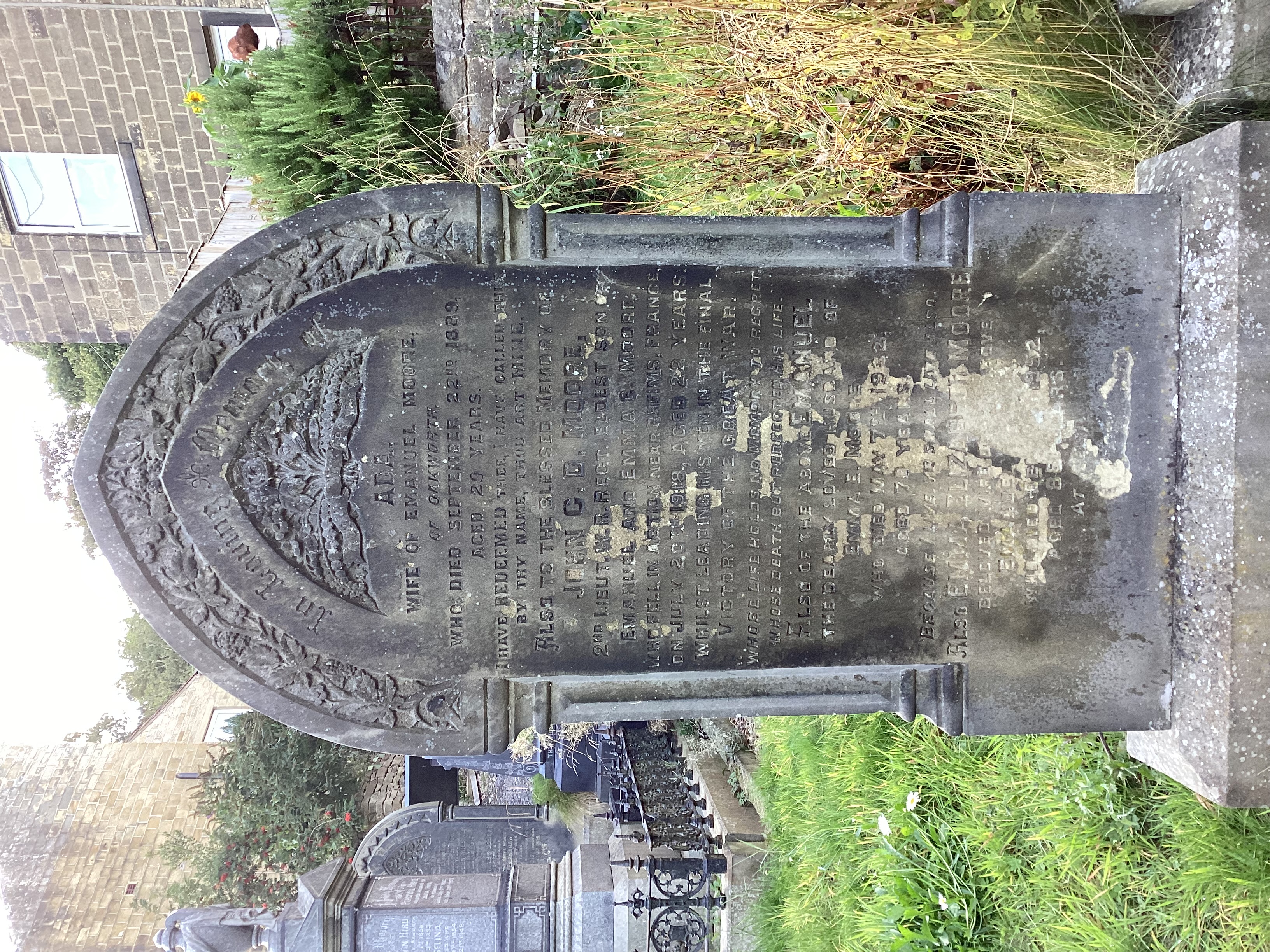
John’s parents Emmanuel and Emma Moore were his next of kin and they would have received his personal effects.
Emmanuel received the outstanding balance from John’s Army account amounting to £65 17s 4d. on the 11th of June 1919 and a War Gratuity payment of £16 10s 0d on 27th September 27 1919.
His mother appears to have applied for a Dependant’s Pension as there is a pension address card for her living at Sykes Head in Oakworth, but there is no record of her having received anything.
His father would have received his medals which were the 1914-15 Star, British War Medal and Victory Medal and would also have been sent a bronze war memorial plaques and King’s certificate inscribed with John’s name.
Remembrance
John is remembered locally in Keighley’s Great War roll of honour book in Keighley Library and on the Temple Street War Memorial on display at Cliffe Castle Museum.
His parents later lived at Sykes, Oakworth and are buried in Dockroyd Methodist Church Graveyard and John’s name is remembered on the family grave in this cemetery.
John is also named on the Oakworth Great War Centenary roll of honour which is on display in Oakworth Community Hall.
John’s name is also on the Temple Street Methodist Chapel war memorial board, on display at Cliffe Castle Museum in Keighley and he is also listed in Keighley’s Wesleyan Methodist Circuit Magazines for Temple Street Chapel, which are in Keighley Library archives. An account of his Army career up to his death in action features in the September 1918 issue of the circuit magazine (see above.)
Information sources:
England & Wales, Civil Registration Birth Index, 1837-1915
West Yorkshire, Non-Conformist Records, 1646-1985
1901 England Census
1911 England Census
Commonwealth War Graves Commission.
Soldiers Died in the Great War, 1914-1919
British Army WWI Medal Rolls Index Cards, 1914-1920
WWI Service Medal and Award Rolls, 1914-1920
Army Registers of Soldiers’ Effects, 1901-1929
World War I Pension Ledgers and Index Cards, 1914-1923
Keighley News archives at Keighley Library.
Family grave in Dockroyd Cemetery, Oakworth.
