
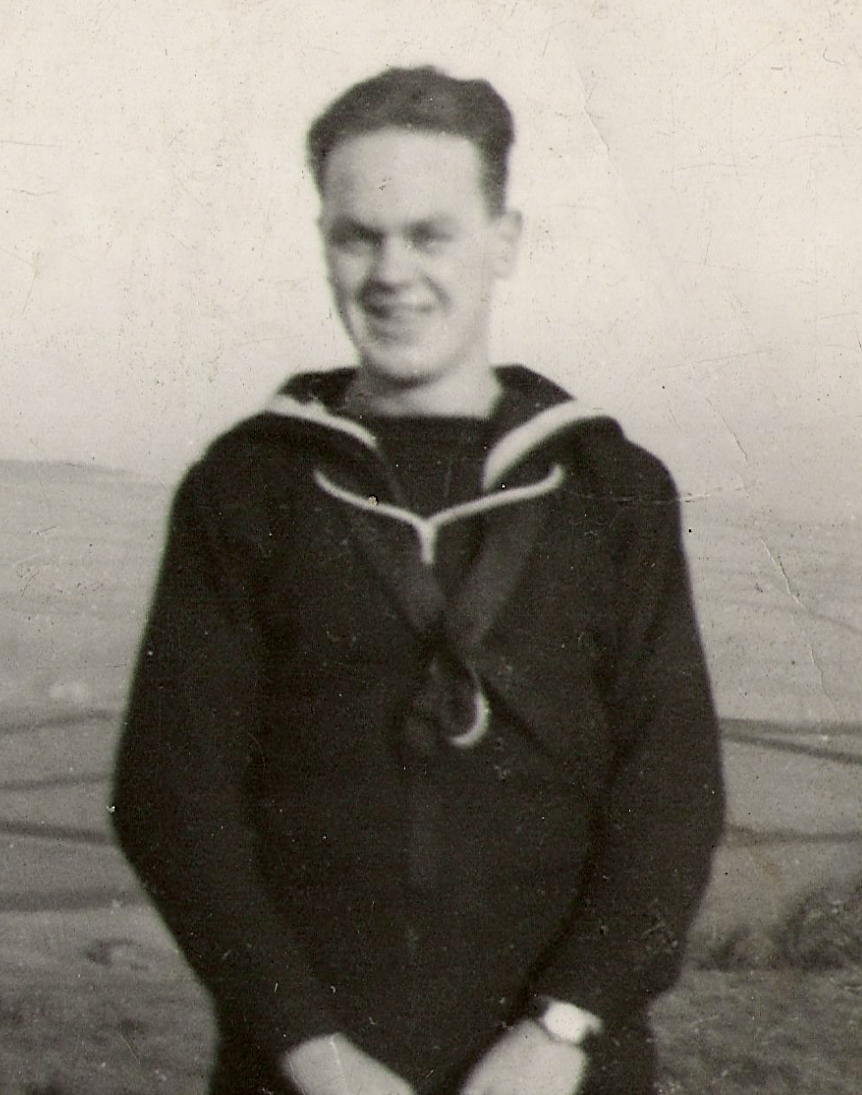
Ordinary Seaman. HMS Daring. Royal Navy. Service no. P/JX 168766.
Early life:
George was born on 3rd January, 1919 to parents Harry Sanderson and Christiana Sanderson née Longman. His birth was registered in Keighley.
He had a sister, Edna, born in 1909 and twin brothers, Harry and John, born in 1911, Thomas born in 1916. Their father Harry was a joiner and builder and the family lived at Low Bank in Oakworth. Harry died in 1926 when George was just seven years of age. During George’s life they had lived at 49, Laycock for five years, 80, Fell Lane in Keighley for six years, and for seven years at 13, Griffe View in Oakworth.
War service:
George joined the Royal Navy during the Second World War. He first trained at HMS Royal Arthur at Skegness and completed his training at Portsmouth.
His family still have a letter he wrote home whilst in training:
G. Sanderson, Forecastle Div, No 30 Class, HMS Royal Arthur, Skegness. Thurs 28/11/39.
Dear Tom, Many thanks for your letter received today.
First of all about coming home. All buses are cancelled now as for government orders, so do not bother trying to meet because for the moment I do not know how I am going to get home.
We have slight (very slight) hopes of getting a car to bring us but if that goes flop it will be by train. However I shall get home somehow. We have got orders today for drafting. A week on Thursday I am going to Portsmouth for final training. Mother says it is cold here. I parade at 6.45 in a morning in the outfit I wear in the photo.
Incidentally we have been issued with 2 vests since I wrote last so that’s OK now.
I have made several references in my last few letters that it would be better if Mother were to go to the Wellington on Saturday but Alice says Mother does not know whether I am going straight to Beeches Terr. or not. Let me know if she will be there.
I am going to try & let you know when I can get home, – the time I mean. If necessary I shall wire Alice who will ring Lees and ask them to tell you. Ask Mother is she will bake some of my biscuits & arrange for them to be packed for me to bring back. They would be best in a tin. It takes your letters two days to come and we shall be off early on Saturday so you may not have time for a reply. So Cheerio until the weekend. Yours George.
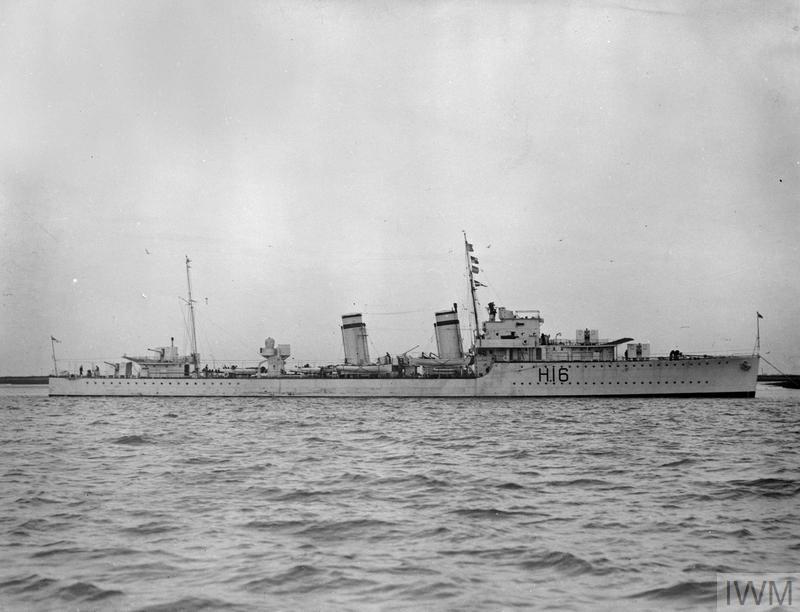
George was posted to serve on the destroyer HMS Daring around late January 1940 and about a month later he was killed in action on 18th February 1940, when the ship was sunk by a torpedo whilst escorting a convoy. He was 21 years old.
An account of the action in which HMS Daring was sunk:
HMS Daring was one of four destroyers escorting a convoy from Norway. In the early hours of February 18, off Duncansby Head, Scotland, U-23 sighted the convoy, but while still on the surface became trapped between the two port-side escorts. To escape she attacked the stern destroyer, HMS Daring. Apparently Daring’s “darken ship” screens were inadequate, which allowed U-23 to easily target her. Two torpedoes were fired and at least one of them hit Daring and caused a secondary explosion which broke the vessel in half. She sank in two minutes and 9 officers and 148 ratings died. Just one officer and four ratings survived.
The National Archives’ reference CAB 65/5/49 – War Cabinet Minutes:
Secret:
War Cabinet 49 (40).
Conclusions of a meeting of the War Cabinet held at 10, Downing Street, S.W.1., on Thursday, February 22, 1940, at 10.30 am.
The one surviving officer from HMS Daring had reported that the vessel, which had been torpedoed on a moonlight night, had turned over and sunk in 30 seconds.
The war cabinet took note of the above statement.
Keighley News dated 24th February 1940:
Another victim is George Sanderson, who lived with his widowed mother at Griffe View, Oakworth. He was 21 years of age and joined the Navy in September last. Sanderson was employed in the goods department at the Keighley L. M. S. station, and before starting work he attended the Keighley Boys Grammar School.
His father was badly gassed in the last war and died some years ago.
He was one of a family of four boys and a girl, and one of his brothers is serving in the Army. After completing his training he was attached to the Daring about a month ago.
An account of the sinking of HMS Daring:
By Able-Seaman William Edward Woodnut, one of the five survivors:
“I was at one of the gun stations on the middle watch looking forward to the time when very shortly I should be in my hammock, when suddenly there was a terrific explosion. The ship broke in half. I was thrown to the deck and saw the funnel falling towards me. Luckily it hit the gun and bounced over into the water.
“Then I went down with the ship as there was a second explosion. I remember rising to the surface to find the sea covered with oil. An air-lock beneath my oilskins enabled me to keep afloat, and I swam round until I came across two seamen clinging to a Carley float. One of them clambered aboard and pulled me and the other man up.
“It was dark, and we could hear the shouts of other men, but could not see them. The stern of the destroyer had returned to the surface, and I understand that one man clung to the propeller until he was picked up by a destroyer’s boat.
“After a time a lieutenant of the ‘Daring’ swam towards us and calmly asked if he could board us. We pulled him on to the float.”
He then described how with a splintered oar and bits of wood they paddled away from the wreck, which disappeared after about half an hour.
“We saw what we took to be a submarine,” he went on. “Thinking it was British, we shouted as hard as we could. Then it occurred to us it might be the U-boat that had torpedoed us. We did not want to be picked up by them, so we stopped shouting, and the submarine disappeared.”
For hours they paddled about, clinging to the float, so that the heavy swell should not throw them overboard. They sang songs and cheered themselves with the thought that they would be entitled to fourteen days’ leave.
When daylight came there was not a sign of the wreck, of other survivors or of any ship that could rescue them. They were bitterly cold, for sleet had fallen during the hours they had been adrift. Eventually a destroyer came into view, and they tried to attract its attention. It stopped about a mile away. Then it began to move away.
“Our hopes dropped,” he said. “Then apparently we were sighted and they approached.”
He was in an exhausted condition when at length he was taken aboard the destroyer. Two days later he was landed in a Scottish port and received such attention that he concluded that “the Scots are the kindest people on earth.”
Remembrance:
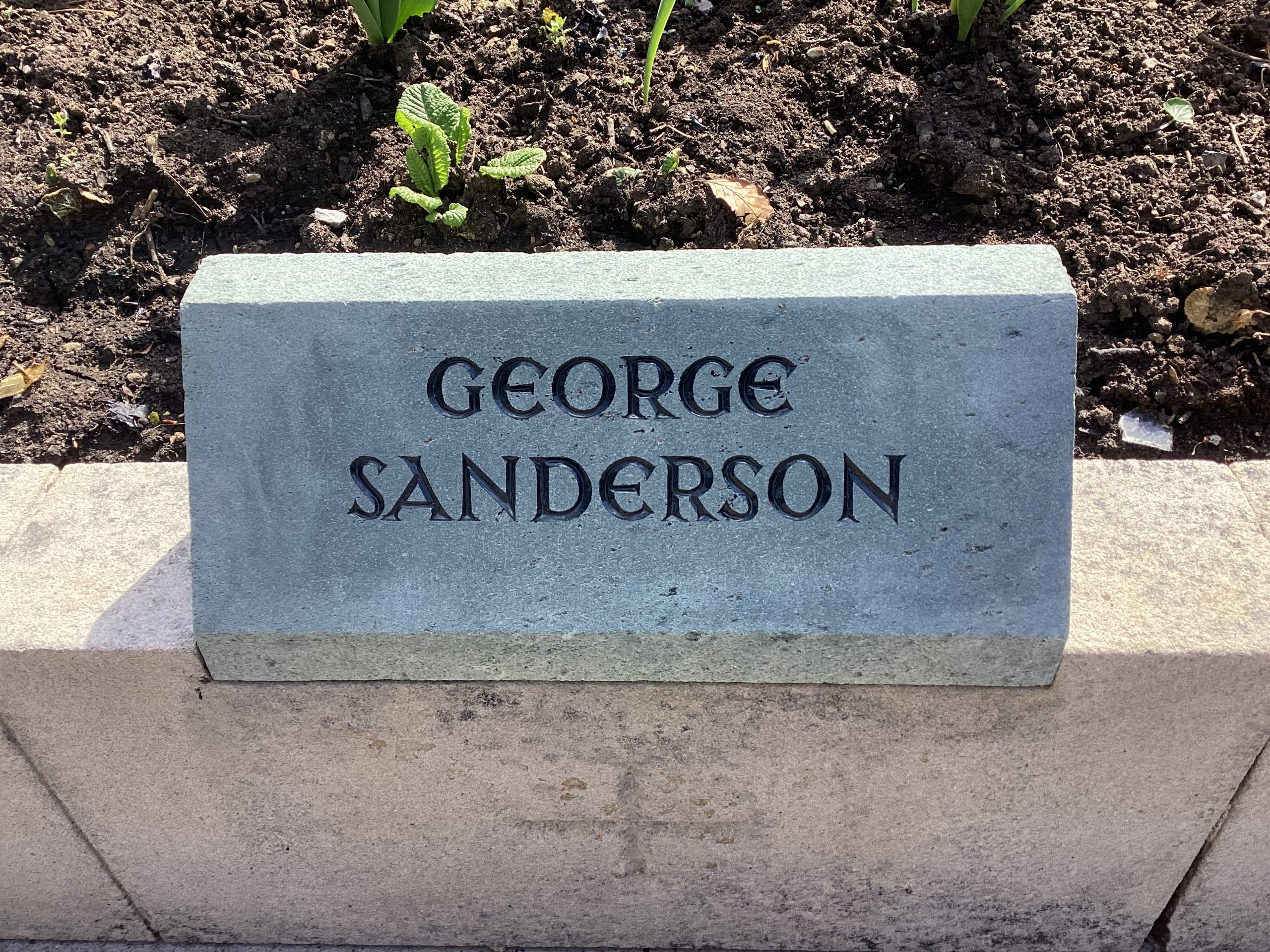
Ordinary Seaman George Sanderson is remembered with honour on the Portsmouth Naval Memorial and also on the Oakworth War Memorial in Holden Park, Oakworth and on the Slack Lane Baptist Chapel war memorial, on display at Oakworth Community Hall.
Information sources:
England & Wales, Civil Registration Birth Index, 1916-2007.
British Army and Navy Birth, Marriage and Death Records, 1730-1960.
Commonwealth War Graves Commission.
Portsmouth Naval Memorial.
England & Wales, National Probate Calendar (Index of Wills and Administrations), 1858-1966, 1973-1995.
1921 Census of England and Wales.
1939 Register of England and Wales.
Keighley News archives at Keighley Library.
Photos and information kindly supplied by the Sanderson family.
The National Archives’ reference CAB 65/5/49 – War Cabinet Minutes.
HMS Daring photograph by courtesy of the Imperial War Museum.
