
Lance Corporal. 1/4th Battalion, Duke of Wellington’s (West Riding) Regiment. Regimental number 266775.
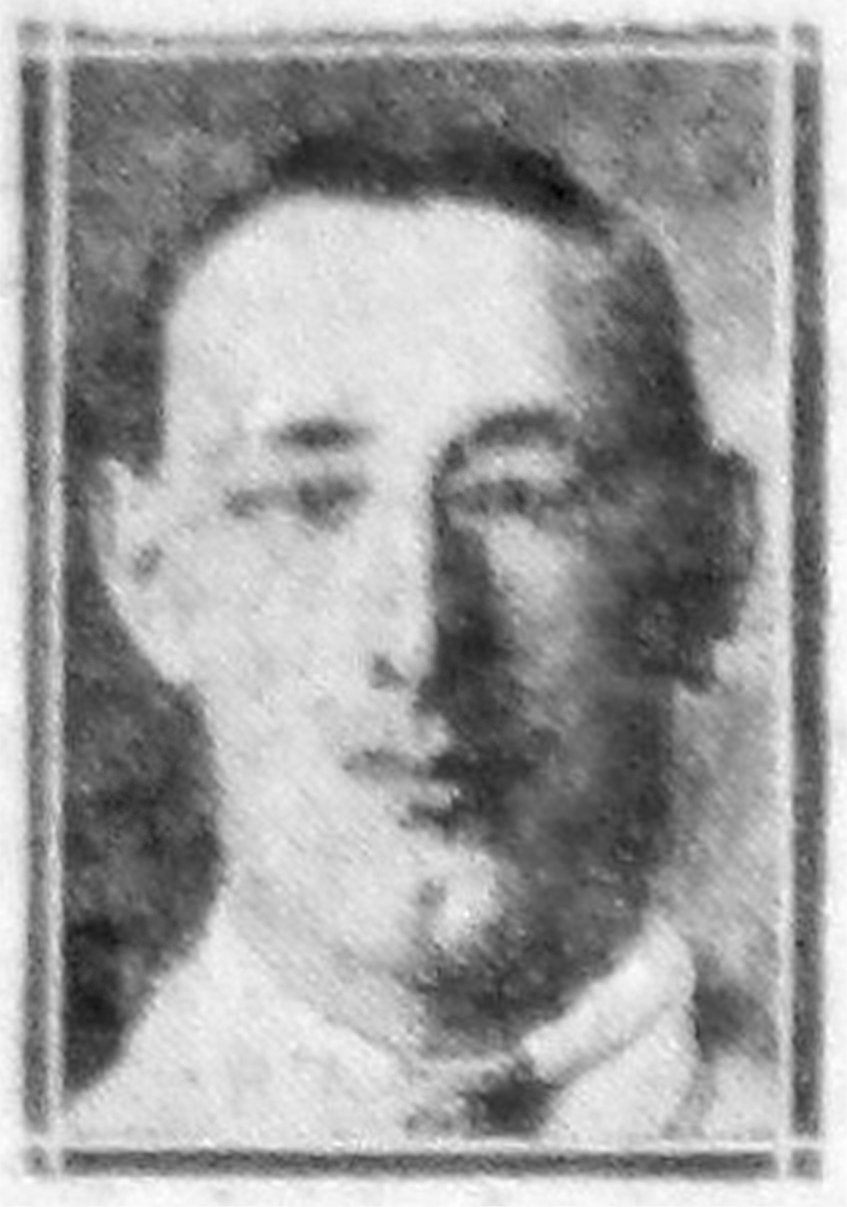
Early life:
George’s parents were William Dumbleton and Mary Elizabeth Dumbleton née Varley, who originated from Pudsey, and Whitby, respectively.
They were married at St John’s Church, Ingrow in Keighley on the 31st of March 1888 and at that time William was a bachelor aged 25, employed as a labourer and he was living at South Street. Mary Elizabeth was a spinster aged 24 and living at Ingrow.
George was born on the 24th of December 1890 (Christmas eve) and baptised at Keighley Parish Church on the 22nd of March 1891. The family were living at 72, Britannia Square in Keighley and William was still employed as a labourer.
In the 1891 census George was aged just three months and living at 72, Market Street in Keighley with his parents William aged 28 and Mary aged 27. (Market Street runs off Britannia Square) His father William was employed as a general labourer.
By the time of the 1901 census George was aged ten. He was still living with his parents William aged 38 and Mary aged 37 at 72, Britannia Square. William was now employed as an iron founder’s labourer but this may just be a change in his job description. Mary was on domestic duties at home with the children and their family had grown to include Laura aged seven and Clifford aged five months. George was likely to be attending a local school but we cannot be sure which one. The nearest was the National School at the bottom of West Lane.
In 1911 George was aged twenty. He was living at 52, Britannia Square in Keighley (Off Market Street) His father William was now 48 and a machine moulder for a malleable iron founder. Mother Mary was aged 47 and they had been married for 23 years. They’d had 11 children but five of them had died. The six children still living were George aged 20, a labourer for a malleable iron foundry; Laura aged 17, a worsted winder, tape sewer and winding frame tender for a worsted yarn spinning company. The four youngest were all attending school and were Clifford aged ten, Lily aged eight, Beatrice aged six and Fred aged four.
War service:
George enlisted at Skipton early in the war and according to the local newspaper he enlisted in 1914. He is one of the early volunteers named in Keighley’s Gallant Sons’ which was published in the Bradford Daily Telegraph on the 6th of October 1915. His entry reads, Dumbleton, G.
Published in the Bradford Daily Telegraph on the 6th of October 1915, was a list of men who volunteered very early in the war. It was entitled ‘Keighley’s Gallant Sons’ and George was named on the list:
Dumbleton | m | 52, Britannia Square | WR (West Riding Regiment)
The ‘m’ for ‘married’ is incorrect as he was single, but it must be him as he’s the only man of serving age in that household and his married father William would have been aged 51 in 1914.
Between 11th and 13th of October 1918, the 1/4th Battalion Duke of Wellington’s West Riding Regiment took part in a successful, prolonged and detailed attack on the German lines and we believe that this was when George was wounded with gun shot wounds in both legs. He had a broken left femur as well. This kind of wound was very serious indeed and the possibilities of infection would be added to the injury itself. This, plus the loss of blood from the gun shot wounds was too much for George and he died in hospital several weeks later.
If he was wounded on the 11th or 12th of October it might be a couple of days being transferred up the chain of evacuation before he arrived at no. 8 General Hospital on the 14th of October. George was treated here for his wounds for 25 days before he died on the 9th of November 1918, just two days before the cease-fire and armistice.
War diary WO/95/4079/6:
The war diary of number 8 General Hospital actually mentions George by name.
The hospital which was at Rouen, records his arrival and subsequent death:
266775. Lance Corporal Dumbleton G. A. 1/4th West Ridings. Admitted on the 14th of October 1918.
Gun shot wounds in both thighs. Compound Fracture Left Femur. Died at 18.30 on the 9th of November 1918.
George was buried nearby in the Bois-Guillaume Communal Cemetery Extension. He is in row G, grave 10b.
Keighley News, Saturday 2nd November 1918, page 3:
Lance-Corporal G. A. Dumbleton (29) of the West Riding whose home is at 52, Market Street, Keighley, has been wounded a third time and is in hospital in France. He enlisted in 1914 and went to France in January, 1915*. In civil life he was a moulder employed by Messrs, W. Slingsby and Co., iron founders, Keighley.
*We suspect this date is a typographical error and we think he must have gone to France in 1916, as he did not qualify for a 1914-15 Star.
Keighley News, Saturday 16th November 1918, page 3:
Lance-Corporal G. A. Dumbleton (29), of the West Riding Regiment, whose home is at 52, Market Street, Keighley, has died from wounds. He was formerly in the employ of Messrs. W Slingsby & Co., iron founders, Keighley.
Remembrance:
George is of course named on his headstone at Bois-Guillaume Communal Cemetery Extension. The family inscription on his headstone reads: ‘IN LOVING MEMORY OF OUR DEAR SON.’
He is also named in the Borough of Keighley Great War roll of honour book at Keighley Library and on the Sun Street Methodist Church war memorial (on the central panel of war dead) as Dumbleton, G. This memorial in the form of five wooden panels, is held in safe keeping by Cliffe Castle Museum.
Post war:
His father as sole legatee in George’s will, received his outstanding Army pay of £35 10s 10d on the 17th of April 1919. £20 of this was the war gratuity payment.
His mother Mary Elizabeth Dumbleton applied for a War Dependant’s Pension and received a payment of 9 shillings and 6 pence per week with the first payment on the 20th of May 1919. This pension went to George’s father William Henry Dumbleton after Mary’s death.
They would have also received George’s personal effects. His war service medals were the British War Medal and Victory Medal and it is likely they received a memorial scroll and bronze war memorial plaque inscribed with George’s name. These usually arrived in 1920 or 1921.
In the 1921 census William and Mary were still living at 52 Britannia Square in Keighley and
William aged 58 had changed his occupation completely to that of a retail confectioner and ran a stall in the market place nearby. His son Clifford aged 20 also worked here as his assistant. Mary aged 57 was on home duties along with their daughter Lily aged 18. Beaty (Beatrice) aged 16 was a worsted spinner for Collingham and Keighley of Coney Lane, whilst Fred aged 14 was a doffer for Irving Firths worsted spinners on Halifax Road.
By the time of the Second World War, William and Mary were living at 89, Bradford Road in Keighley. William had retired (as a machine moulder) and Mary was on unpaid domestic duties.
Mary died aged 76 and her death was registered in the last quarter of that year. William died aged 78, registered in the first quarter of 1941. Both their deaths were registered at Keighley.
Information sources:
West Yorkshire, England, Church of England Marriages and Banns, 1813-1935.
England & Wales, Civil Registration Birth Index, 1837-1915.
West Yorkshire, England, Church of England Births and Baptisms, 1813-1910.
1891 England Census.
1901 England Census.
1911 England Census.
Keighley’s Gallant Sons, at Keighley Library.
The Keighley News archives at Keighley Library.
British Army World War I Medal Rolls Index Cards, 1914-1920.
UK, World War I Service Medal and Award Rolls, 1914-1920.
World War I Pension Ledgers and Index Cards, 1914-1923.
Army Registers of Soldiers’ Effects, 1901-1929.
1921 England Census.
Borough of Keighley Great War roll of honour book at Keighley Library.
Sun Street Methodist Church war memorial at Cliffe Castle Museum.
Soldiers Died in the Great War.
Commonwealth War Graves Commission.
Bois-Guillaume Communal Cemetery Extension, Seine-Maritime, France.
1939 England and Wales Register.
England & Wales, Civil Registration Death Index, 1916-2007.
