
Lance Corporal. Driver. 116 Road Construction Company. Royal Engineers. Service Number: 2184641.
Previously 16th Battalion then 15th Battalion, Prince of Wales Own West Yorkshire Regiment. Regimental number 16/223.
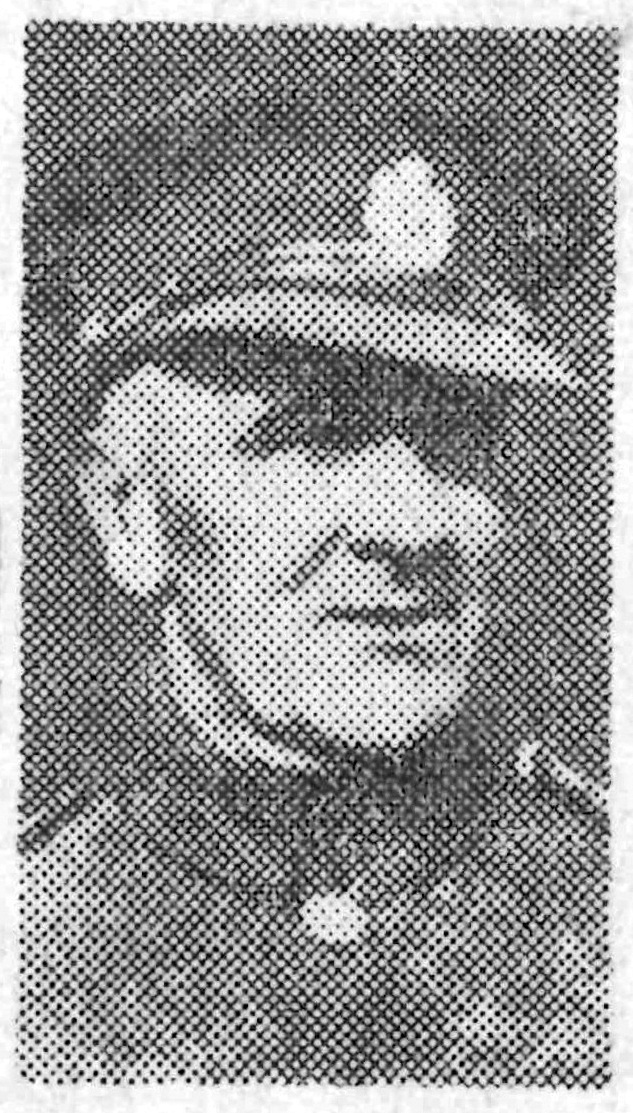
Early life:
Harold Lobley was born in 1894 at Saltburn By The Sea, near Middlesborough. His birth was registered at Guisborough, in the third quarter of the year. His parents were William Lobley and Phoebe Lobley née Gibson, who had been married at Guisborough at the end of 1892.
Harold was baptised in the town on the 15th of June 1894.
In 1901 they were living at 20, Back Pearl Street in Saltburn on Sea, William was aged 33 and employed as an Ironstone miner (under ground) and this would almost certainly be the extensive Hob Hill Mines located to the South West of Saltburn. Phoebe was also aged 33 and at home looking after their three children who were Harold aged six, William aged four and Alice aged two.
The Hob Hill Mines are now the site of Saltburn Golf Club Driving Range.
By 1911 Harold was aged 16. His name appears in the census that year and it looks like his father added his name but the enumerator put a red line through it, suggesting he wasn’t actually living there on the day of the census. In the workplace column it says: ‘At Sea’ which suggests he was away or perhaps working on a boat.
The family had moved a short distance to Back Amber Street. Harold’s father William was now aged 43 and employed as a domestic gardener and labourer, his mother Phoebe was also aged 43 and at home. Their son William was aged 14 and a painter, Alice May was aged 12 and at school.
Great War service 1914 to 1919:
Harry enlisted with the 16th Battalion West Yorkshire Regiment (The First Bradford Pals Regiment), followed by the 15/17th Battalion West Yorkshire Regiment. He was taken as a prisoner of war at Courcelles le Comte on the 27th of March 1918 and held in captivity until the end of the fighting.
(Courcelles le Comte is about half a mile South of Moyenvilles. See this trench map from the National Library of Scotland.)
The 15th battalion war diary tells quite a tale of how they were surrounded and captured on the days which were the first part of Operation Michael, the German Spring offensive. British troops were caught by surprise by the speed and intensity of the attack and were captured in large numbers.
WO-95/2361/4. War diary of the 15th Battalion West Yorkshire Regiment:
22nd March 1918:
The Battalion left CAUCOURT & HERMIN and marched to VILLERS BRULIN, where it embussed for POMMIERS with the intention of staying the night. These plans were changed during the journey and the Battalion debussed at HAMLINCOURT, and immediately prepared to take over the line in BLAINVIL the BULLECOURT Sector, relieving the 15th Royal Scots Regt.
The strength of the Battalion proceeding to the trenches was 21 Officers and 625 Other Ranks. The details of the Battalion left behind moved into huts at BLAIRVILLE.
23rd March:
The Battalion side-slipped to the Right in front of ST LEGER and took up position near JUDAS FARM.
25th March:
The Battalion withdrew by night to BOYELLES-ERVILLERS Road.
26th March:
Further withdrawal took place to Cemetery at HAMELINCOURT Heavy shelling and Machine Gun fire had been directed against all these positions, and the Battalion had casualties daily.
27th March:
The Battalion withdrew to S.E. of MOYENVILLES, and here the enemy made his most determined attack. His Machine Gun fire was extraordinarily intense and the Battalion suffered many casualties. It was almost impossible for the wounded to withdraw. Both our flanks, for some reason unknown, were “in the air”, and the enemy poured through in large numbers and attacked from the rear. A small number of men and four Officers succeeded in making their escape, but the greater part, either through wounds or because of the rapid closing of the circle by the enemy, were unable to withdraw.
28th March:
The 10% officers, N.C.Os and men who had remained behind, totalling 4 Officers & 114 Other Ranks, proceeded from BIENVILLERS to the line under Captain W. Peace, M.C. and established themselves in the Support Line E. of Road from BOIRY to AYETTE. Two Officers and the men who had escaped during the attack on the 27th March joined this party and the night was spent in preparing a defensive line.
29th March:
At dawn this party went forward to the front line and forward posts were held under Lieut. B. Reed. The men in these posts inflicted many casualties on the enemy opposite who was attempting to wire in his new line.
30th March:
About 12.30 a.m. on the 30th. the Battalion was relieved by the 11th Border Regiment and returned to billets at BIENVILLERS.
The estimated casualties were :-
1 Officer Died of wounds.
2 Officers Wounded and Missing.
7 Officers Wounded.
9 Officers Missing.
19 Other Ranks Killed, 77 Other Ranks Wounded, 500 Other Ranks Missing.
Prisoner of War:
According to the Prisoner of War records held by the International Committee for the Red Cross, Harold was taken prisoner on the 27th of March 1918. A ledger entry dated 10th of July 1918 states that he was held at Parchim Camp which was near to the town of Parchim, about 75 kilometres East of Hamburg in Germany. Accounts vary with regard to the treatment of prisoners at this camp. At the war’s end food was scarce and the men may have been released and sent to walk in the direction of home and to fend for themselves on the way.
Harold was repatriated to the UK on the 19th November 1918, whilst still listed with the 15th Battalion West Yorkshire Regiment. The men who returned would have been in very poor health from debility and malnourishment and would have needed a period of recuperation in hospital before being allowed home. After a couple of months, Harold was discharged to the Z Reserve on the 24th of February 1919 so his fitness must have been back up to scratch.
After the war, Harold was awarded the 1914-1915 Star, the British War Medal and the Victory Medal for his war service.
In 1919, Harold married Annie Ferrier née Gregson at Grimsby. Their marriage was registered there in the last quarter of the year.
Annie was a war widow when she married Harold. Her first husband was John Robert Ferrier, a deck hand who was killed when his ship, H.M. Trawler Margate was sunk on the 24th of April 1917. This trawler was being hired by the Royal Navy for use as an armed patrol boat when she was sunk off Spurn Point, by gunfire from UC-50 under the command of Rudolf Seuffer. There were thirteen casualties, including John Ferrier.
John and Annie had five children.
Between 1919 and 1922, Harold was living at Back Amber Street in Saltburn By The Sea, according to the Electoral Rolls. this was his parent’s home and he may not have updated the record as it conflicts with the 1921 census address which is at Grimsby.
In the 1921 census Harold was living at 100, Duncombe Street in Grimsby. He was living with his 30 year old wife Annie and her three (of five) children, Walter aged thirteen, Frank aged eleven and Edna aged seven, all ‘whole time’ at school. Her eldest two had moved out of the family home and were Robert aged 23 and Eva aged 20. Also boarding here were Ava Dent aged 76 and Daniel Birch aged 61. Harold was aged 27 and employed as a general labourer for Grimsby Urban District Council.
The move to Keighley:
Annie died aged just 46 in 1924 and Harold was remarried on the 22nd of May 1926, to Ada Beck in Keighley. Why or how he ended up here is not known. On the marriage record he was aged 32 and a widower. He was an asphalter for Keighley Construction Company. Ada was aged 26 and a spinster employed as a stocking mender. At that time they were both living at 136, Grange View on Lawkholme Lane.
During their married life according to the Electoral registers they were living at various addresses. They were at 21, Grange Park View, Keighley. This appears to have been the home of Ada’s parents George and Jane Beck, Ada Lobley. Between 1926 and 1928 he was recorded at 136, Lawkholme Lane, Keighley with Joshua and Hannah Jane Beck. From 1930 to 1935 he was living at 1, May Street, in Riddlesden with his wife Ada Lobley. From 136 and 1937 they had moved to 23, Wren Street in Keighley and from 1938 to 1940 they were living at 31, Grange Crescent, in Morton.
Second World War service:
Harold is not recorded in the 1939 Register, suggesting that he was already serving in the armed forces and was away from home. He would have been aged 45. Ada was aged 40 and living at 31, Grange Crescent in Riddlesden and was a mender in hosiery manufacturing.
From the Keighley News report in 1940 we know that Harold had worked for the Keighley Post Office and was working for the Scientific Roads Limited before enlisting. He was serving with the 116 Road Construction Company of the Royal Engineers when he died, having been posted missing since the 17th of June 1940. He was on H.M. Transport Lancastria which was sunk by German Bombers off the French port of St. Nazaire, on the 17th of June 1940. This occurred during Operation Aerial to evacuate British Nationals and Troops from France and occurred two weeks after the Dunkirk evacuation. The disastrous sinking was the worst in British Maritime history with an estimated 4000 to 7000 losses. The sinking was kept secret at the time. Harold’s name is on column 29 of the Dunkirk Memorial in France.
According the Commonwealth War Graves Commission record he was aged 36 but in fact he was nearer to age 46.
The Keighley News. 10th August 1940:
Keighley District Men Missing and Prisoners.
Lance-Corporal Harold (Bill) Lobley, of Willow Garth Cottage, Riddlesden, who was a prisoner of war in Germany during the last war and joined the Army voluntarily at the outbreak of the present hostilities, has been posted missing since 17 June. Lance-Corporal Lobley, who is 45, served through the whole of the last war, and in the present was with the Royal Engineers. Before joining up he was employed by the Scientific Roads, Ltd., and was formerly under the employment of the Keighley Post Office.
Remembrance:
Harry is named on the Dunkirk Memorial and also on the Borough of Keighley Second World War Memorial board in the foyer of Keighley Library.
Harold’s Second World War medals were the 1939-49 Star and the War Medal. They were awarded in 1950, but we have no record of the recipient, although it was probably Annie.
Post war:
In the Electoral rolls after Harold’s death, his widow Ada was living at Willow Garth Cottage in Morton between 1945 and 1948. She remarried, to Percy Roe, the marriage was registered in the Worth Valley in the third quarter of 1948. Percy died aged 70 on 5th April 1961. He was living at 1, Fir Street in Keighley. His probate from May 1961 left the sum of £784 16s. 10d. to his wife Ada Roe. (Fir Street still exists and runs off Hainworth Wood Road.)
Ada died aged 68 on the 18th of July 1968, whilst living at 26, Peel Place in Keighley (This street was off South Street and is now occupied by more modern flats named Farish House.) Ada’s death was recorded in the Worth Valley in the third quarter of that year and the August 1968 probate record shows she left £2338.
Information sources:
England & Wales, Civil Registration Marriage Index, 1837-1915.
England & Wales, Civil Registration Birth Index, 1837-1915.
England, Select Births and Christenings, 1538-1975.
England & Wales, Christening Index, 1530-1980.
1901 England Census.
1911 England Census.
Uboat.net.
British Army World War I Medal Rolls Index Cards, 1914-1920.
World War I Service Medal and Award Rolls, 1914-1920.
1921 England Census.
West Yorkshire, Non-Conformist Records, 1646-1985.
England & Wales, Civil Registration Marriage Index, 1916-2005.
1939 England and Wales Register.
Keighley News archive at Keighley Library – WW2 Scrapbook.
Commonwealth War Graves Commission.
England & Wales, Civil Registration Death Index, 1916-2007.
England & Wales, National Probate Calendar (Index of Wills and Administrations), 1858-1995.
