
Private. (Sapper) 49th Division Signal Company. Number 481793.
Formerly Duke of Wellington’s West Riding Regiment. No. 1637 and later, 265107.
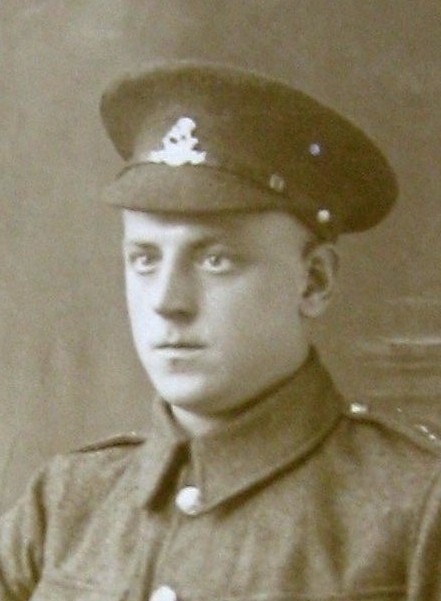
Early life:
Sam’s parents were John Henry Bancroft and Agnes Ann Bancroft née Green, who had been married in the first quarter of 1890 when John would have been 24 and Agnes would have been 17 or 18.
A year later in the 1891 census (taken on 5th April) they were living at 8, Coppy Row in Oakworth (just around the corner from the Golden Fleece Inn). John was employed as a worsted weaver and Agnes was a worsted drawer.
Sam was born at 8, Coppy Row in Oakworth on the 8th of November 1891 and baptised at a Non-Conformist Church in Oakworth on 21st December in the same year.
The family were at Coppy Row for about four years until 1895, when they moved to 14, Ickornshaw at Cowling, near Skipton.
By the 1901 census John Henry aged 35 and Agnes Ann aged 29 were still living at Ickornshaw and now had seven children who were Sam aged nine, Joe aged eight, Emma aged six, Fred aged four, John aged three, Wille aged one and the youngest was Mary Ann aged just three months. John was still employed as a worsted weaver. The nearby Ickornshaw Mill appears to have been just cotton, but the other mills in the village of Cowling were all Cotton and Worsted and they were, Carr Mill, Acre Mill, Royd Mill and Croft Mill and they were all in operation at this time and all within easy walking distance for John Henry.
By 1911 they had all m oved to Silsden where they were living at 11, Walker’s Place. The family was John Henry who was now aged 45 and a cotton, woollen & shoddy weaver. Agnes Ann was aged 39 and they’d been married for 21 years and had 13(!) children, four of whom had died. The children still alive were Sam aged 19 and a dyer’s labourer in warp dyeing; Joe aged 18, a mechanic at a bobbin factory; Emma aged 16, a weaver of cotton and worsted; Fred aged 14 and a dyer’s labour; John aged 13, a labourer at a bobbin factory. The younger children at school were Willie aged 11, Mary Ann aged ten and Michael aged five. The youngest in the family was Clara aged just three months. It’s likely that many of them were employed at Beck’s Mill and the nearby Dyeworks which was very close to Walker’s Place.
War service:
There are no Army service records for Sam, but we know that after the outbreak of war, Sam was mobilised in 1914 with the local Territorials (1/6th Battalion, Duke of Wellington’s West Riding Regiment) and is named on the Battalion’s nominal roll of men who sailed for France on 14th February 1915, arriving at Boulogne the next day. Sam would have been aged about 23 at the time. Also named on the same roll are J.G Bancroft and F. Bancroft. His rank was Private and his service number was 1637.
When the numbering system was revised he received a six figure number of 265107.
He was later transferred to the Royal Engineers as a sapper and served as a signalman with the 49th Division Signals Company.
We know from other research that Sam’s four brothers all served in the Army during the Great War. Joe was awarded the Distinguished Conduct Medal (D.C.M.) and the Military Medal (M.M.) and Fred was awarded the Military Medal M.M.
Sam was apparently recommended for the D.C.M. but did not receive any gallantry medals. On 22 October 1915 this was mentioned in the Craven Herald.
These and many other reports from the Craven Herald newspaper have been transcribed by the ‘Craven’s Part in the Great War’ group and Sam’s record is available here:
Craven’s Part in the Great War – Sam Bancroft.
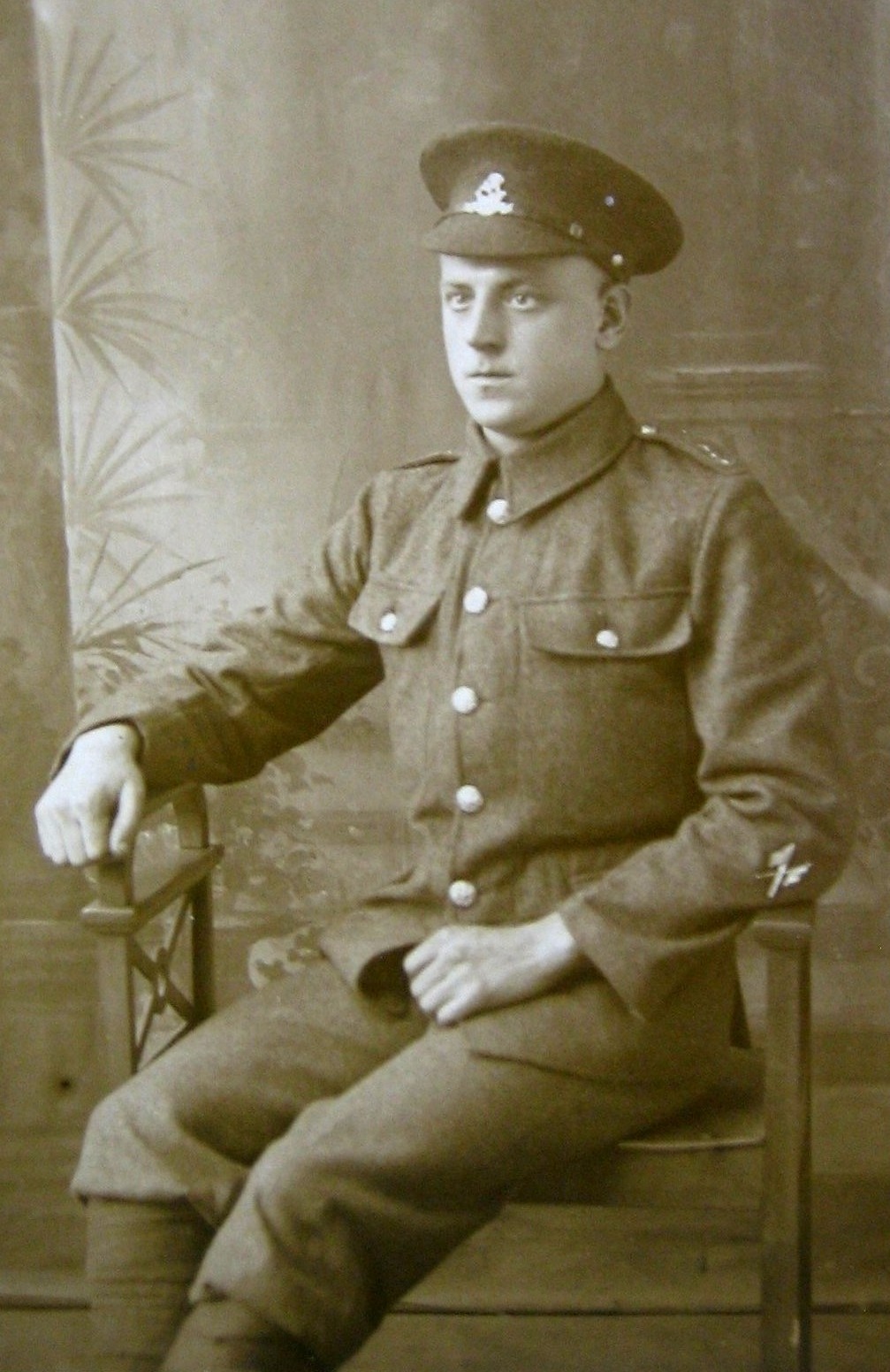
Wartime marriage:
Sam must have received a pass to go on home leave in summer 1917, because on Thursday the 12th of July 1917, he married Nora Crossley at the Parish Church in Silsden. Sam was 25 and a soldier, Nora was 21. Their witnesses were John Bancroft and Gladys Crossley and the Vicar was E. G. Peters M.A.
Their daughter Joyce was born later in the same year and her birth was recorded at Skipton in the last quarter of the year.
Sam died on the 14th of October 1918. He’d had surgery to amputate his right leg after being hit by a shell splinter. He was the only man of the unit who died on that date, but six men were killed the day before and we suspect he was wounded when they died and was evacuated to the Casualty Clearing Station on the 13th.
The Keighley News, 20th October 1918, page 3:
Sapper Sam Bancroft, Royal Engineers, and son of Mr and Mrs J. H. Bancroft, of 11. Walker’s Place, Silsden, has died at a casualty clearing station in France after having his right leg amputated. Sapper Bancroft was mobilised with the local Territorials in 1914, and after three years with that regiment, was transferred to the Royal Engineers. Mr. and Mr Bancroft have three other sons serving the colours. One son, Sergeant Joe Bancroft, D.C.M., M.M. was killed a few months ago.
Sam died at the age of 26 years, at no. 23 Casualty Clearing Station on 14th October 1918. He was buried at the Duisans British Cemetery in grave 60 of row B in plot VII.
War diary of the 23rd Casualty Clearing Station for October 1918:
AGNEZ LES DUISANS.
11th October:
Casualties.
Admitted, 147. Evacuated, 96 (by train.) To duty, 10. Died, 5.
Sam Bancroft was probably one of the five men who died that day.
Post war:
Sam was posthumously awarded the 1914-1915 Star and the British War Medal and Victory Medal which would have been sent to his widow Nora. She would also have received any personal effects and a bronze war memorial plaque and King’s certificate inscribed with his name. These usually arrived in early 1920 or 1921.
Nora also received his remaining Army pay of £13 9s. 10d. on 8th April 1919 and a further payment of £1 9s. 4d. on 26th August 1919. She then received a payment of £25 10s. 4d. on 1st July n1919 which included a war gratuity payment of £24.
In the 1921 census Nora and their daughter Joyce were living at 15, Laycock with her father Fred Norfolk Crossley, a cabinet maker aged 53 and mother Emma Crossley aged 50. Nora was aged 25 and a weaver of dress goods and Joyce was three.
Nora also received a £6 grant on 29th October 1918 and a dependant’s pension of 20 shillings and five pence per week for herself and Joyce. The first payment was made on 21st April 1919. The payment for Joyce would expire on her 16th birthday on 31st October 1933.
In the 1939 register, Nora and Joyce were at 13, Laycock with her widowed father Fred who was now a farmer. Nora was a milkmaid and Joyce was a poultry maid, both assisting Fred on the farm.
Nora died aged 64, registered in the Worth Valley in the third quarter of 1960. Joyce died (unmarried) aged in 1976 aged about 59 and her death was registered in Keighley.
Remembrance:
Sam Bancroft is remembered on the Cowling War Memorial.
He is also named on the Silsden War Memorial and also on the Silsden St. James’ Church War Memorial and in the Silsden Roll of Honour Book.
He is now named on the Oakworth Great War Centenary roll of honour at Oakworth Community Hall as he was born in the village.
Information sources:
England & Wales, Civil Registration Marriage Index, 1837-1915.
West Yorkshire, England, Electoral Registers, 1840-1962.
England & Wales, Civil Registration Birth Index, 1837-1915.
West Yorkshire, Non-Conformist Records, 1646-1985.
1901 England Census.
1911 England Census.
West Yorkshire, England, Church of England Marriages and Banns, 1813-1935.
England & Wales, Civil Registration Marriage Index, 1916-2005.
England & Wales, Civil Registration Birth Index, 1916-2007.
1939 England and Wales Register.
England & Wales, Civil Registration Death Index, 1916-2007.
Keighley News archives at Keighley Library.
Craven’s Part in the Great War.
Commonwealth War Graves Commission.
Soldiers Died in the Great War.
World War I Service Medal and Award Rolls, 1914-1920.
Army Registers of Soldiers’ Effects, 1901-1929.
World War I Pension Ledgers and Index Cards, 1914-1923.
England & Wales, Civil Registration Death Index, 1916-2007.
England & Wales, National Probate Calendar (Index of Wills and Administrations), 1858-1995.
We are particularly grateful to the Craven’s Part in the Great War website.
